 ServicesBeverage Destruction and RecyclingEthanol Recovery & ReclamationTax Compliance & RecoveryHand Sanitizer Recycling
More than 290 million tons of municipal solid waste are generated each year in the United States. Over half of that ends up in landfills. As awareness grows about the environmental and human costs of excessive waste, the zero waste movement is gaining serious momentum.
Our guide explores the environmental impact of current waste disposal habits, offers practical waste diversion strategies and shares tools for reducing the amount of trash sent to landfill. Whether you're part of a business, municipality or household, there's a long-term path to cleaner systems, better health and less waste.
Zero waste to landfill means that all waste generated is either reused, recycled, composted or processed in a way that avoids disposal in a landfill. “Zero waste” means that after materials have been used, we apply systems and habits that support waste conservation and minimize environmental impact.
This concept supports the circular economy, where materials are kept in use and resources are recovered instead of thrown away. It also helps reduce greenhouse gas emissions, protect human health and conserve valuable natural resources.
The benefits of zero waste efforts extend far beyond a cleaner trash bin. Here's why this approach is so impactful.
Landfills emit methane, a powerful greenhouse gas that’s over 25 times more potent than carbon dioxide. Diverting waste from landfill cuts emissions at the source and reduces the climate burden of our waste systems.
Landfill pollution can contaminate groundwater, release toxic fumes and impact nearby communities. Zero waste systems reduce toxic exposure and improve air and water quality.
By recovering materials, extending product life cycles and encouraging closed-loop systems, zero waste supports innovation and sustainability in manufacturing.
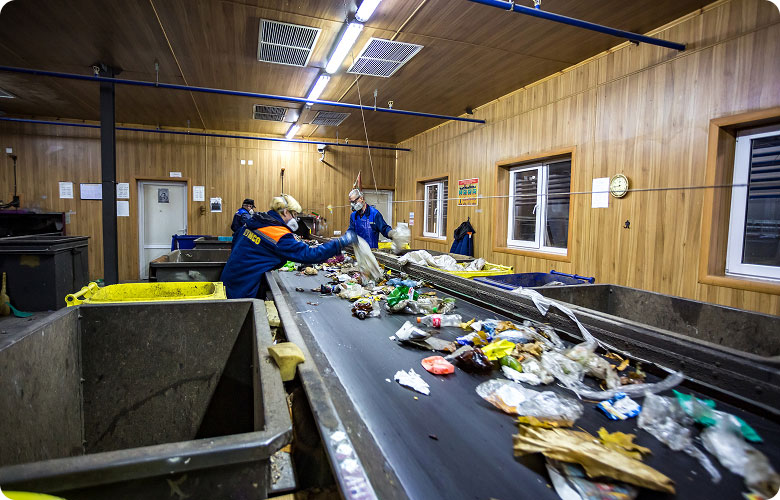
Understanding your waste stream is the first step. The waste stream refers to the total flow of waste materials generated, from production to disposal.
Sort waste into categories:
By analyzing your waste stream, you can identify which materials are recoverable, which go to landfill and where there's room for improvement in recycling and composting systems.
The foundation of waste conservation still starts here. Reduce what you buy and consume, especially single-use items
Reuse containers, bags and products whenever possible. Recycle materials properly by placing them in the correct recycling bin and ensuring they are clean and sorted
A significant portion of food waste and paper can be recycled or composted. Make it easy with well-labeled bins, clear guidelines and employee or community education.
Anaerobic digestion is an eco-friendly way to process organic materials like food waste, capturing methane for energy and producing nutrient-rich compost. It’s an important tool for diverting waste from landfill and turning it into value.
For non-recyclable and non-compostable waste, waste to energy technologies offer an alternative to landfill. These systems convert waste into electricity or fuel, reducing volume and producing usable energy. That being said, this should only be after you’ve maximized reduction and recycling efforts.
A waste audit helps identify what’s being thrown out, what could be recycled or reused and where contamination occurs. Use the data to improve your waste diversion programs and track long-term progress.
Support the circular economy by designing or choosing products made from recyclable materials and minimal packaging. Focus on materials that are easily sorted in the recycling stream and consider a product’s full life cycle during design.
Whether you're aiming for 90% diversion or total landfill elimination, set clear, measurable targets. Establish checkpoints, review progress regularly and engage teams or communities in your zero waste mission.
Despite the benefits, there are challenges to address:
Still, the long-term benefits outweigh the initial hurdles. Communities and companies that commit to zero waste often find cost savings, improved public perception and stronger environmental impact reporting.
Zero waste isn’t just for large organizations or government programs. You have the power to create meaningful change when you:
Shifting from a waste stream to a resource stream means looking at trash differently. Food waste becomes compost. Plastics are recycled into new products. Organic materials are used in anaerobic digestion to generate energy. Every decision along the way reduces environmental impact and supports the circular economy.
At Parallel Products, sustainability is core to how we think about innovation. From product design to packaging, we strive to reduce greenhouse gas emissions, minimize waste disposal impacts and support long-term environmental health.
Our commitment to waste conservation is part of how we deliver Parallel Quality: products built with purpose, performance and planet in mind.
Start building your zero waste strategy with Parallel Products. Request a quote today.