 ServicesBeverage Destruction and RecyclingEthanol Recovery & ReclamationTax Compliance & RecoveryHand SanitizerHealth & Beauty Product RecyclingPlastic RecyclingTransportation & LogisticsSolar EnergyFacilitiesLouisville, KYOntario, CABronx, NYNew Bedford, MADenver, CODade City, FLSouthcoast Renewables ProjectIndustries ServedBeverage AlcoholHand SanitizerHealth & Personal CareBeautyManufacturingAboutBlogGuidesVideosFAQContact
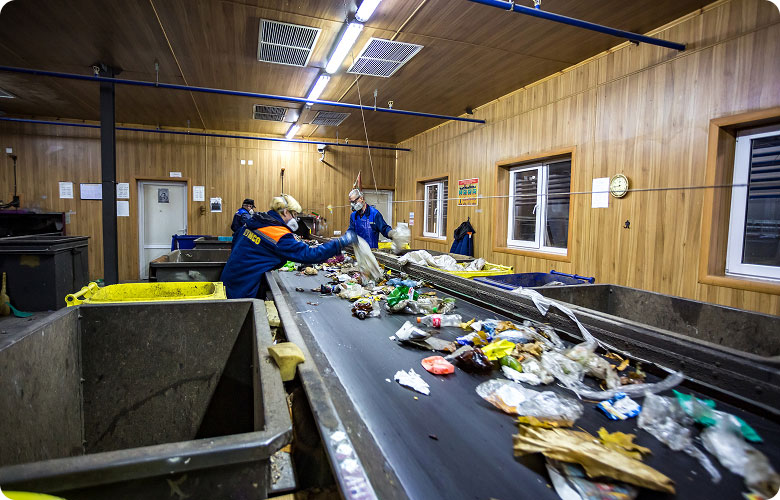
This is an AI generated image to maintain brand anonymity and communicate the blog’s purpose.
Climate goals, regulatory pressure, and consumer awareness have combined to make packaging sustainability central to product strategy. Product managers are key players in shaping a more sustainable future and keeping their companies at the forefront of innovation.
In 2026, sustainable packaging will be both an ethical choice and a competitive advantage. At Parallel Products, we’ve identified key trends to be aware of to ensure you don’t fall behind.
True sustainability includes every stage of a product’s lifecycle, not just the very end. When sustainability is highlighted from ideation onward, businesses are better able to meet cost, regulatory compliance, and consumer expectation goals. Product management that prioritizes cross-functional coordination with R&D, operations, procurement, marketing, and supply chain management is the best way to make eco-friendly changes that work.
Life cycle thinking and life cycle assessment (LCA) are core tools for businesses looking to identify opportunities to better align with environmental, social, and governance (ESG) goals. These goals are reported publicly; utilizing product management to meet these goals improves transparency and builds customer trust.
Consumers are increasingly holding brands and packaging producers responsible for prioritizing packaging sustainability. (Nordigården et al., 2025). Consumers can easily spot packaging that’s hard to recycle, and they increasingly see sustainable packaging as a reason to buy.
Our research has indicated six key major trends which we predict will be key for sustainable packaging in 2026 and beyond. Knowing where the sustainable packaging movement is headed helps brands stay ahead of both sustainability goals and consumer expectations.
Material innovation, such as biobased and renewable packaging, has been and will continue to be at the forefront of packaging sustainability trends. Seaweed-based materials, for example, have garnered interest for use in commercial packaging.
Brands will continue to embrace reusable and refillable packaging to reduce waste and work toward a more circular economy in packaging. Beauty and spirits brands have seen particular success with this strategy because they are habitually re-purchased by consumers and hospitality clients.
Technology such as smart barcodes enables increased transparency and tracking, which is useful to both brands and consumers. Additionally, research into smart packaging systems has found that it can reduce food waste through freshness monitoring. Solutions such as these are innovative approaches to decreasing waste. (Douaki et al., 2025)
Worldwide concern for more sustainable product management is contributing to increasing corporate regulation. Already, 12 U.S. states have banned polystyrene foam packaging. To meet increasingly common Extended Producer Responsibility (EPR) regulations, packaging will start to favor easily recyclable mono-materials and compostables.
Parallel Products is an industry leader in recycling PET, the most common plastic used in beverage packaging, into usable plastic.
Strategies to reduce material volume and eliminate redundant packaging layers have the dual benefits of being more easily recyclable as well as a lower cost per unit. Consumer distrust in current mass recycling programs is leading them to favor mono-material packaging over multi-material, difficult-to-recycle packaging. (Sustainable Packaging Coalition, 2025).
The growth of AI presents an opportunity to improve material sorting and recovery, thereby supporting recycling efforts. Additionally, AI has the potential to track and correct recycling mistakes.
While sustainable packaging management is the inevitable direction the market is moving in, it’s not without its challenges. Acknowledging and preparing for these challenges is best practice for businesses looking to stay ahead of the curve.
Eco-friendly packaging innovations, such as biobased packaging, often have more demanding R&D, scale, and sourcing costs simply because they aren’t as established as other materials.
Hand-in-hand with the higher cost of novel materials is the difficulty in obtaining a reliable supply. Sourcing raw materials for new biobased materials can sometimes be inconsistent.
Not all sustainable packaging solutions are suited for all products. Performance, durability, and shelf life still impact a material's viability for specific products, particularly food and beverages.
Recycling rules and practices differ even between neighborhoods, and understanding how and what packaging can be recycled can be difficult for consumers to understand. Refillable or reusable packaging may also require consumers to change their habits.
Just as waste management regulations can be confusing for consumers, they can also be confusing for businesses. Packaging may be recyclable in one jurisdiction, but not another.
Demonstrable commitment to sustainability is a valuable asset, but it’s not always easily achievable. Obtaining credible LCA data, whether for internal or external use, can be challenging.
Sustainability expectations from both consumers and regulatory bodies will only continue to increase. Exploring your business’s options for a more eco-friendly future now saves you from scrambling to meet these expectations in the future.
Meeting future goals requires an accurate understanding of your current standpoint. Mapping your current materials, suppliers, end-of-life dispositions, and carbon footprint by using LCA tools or partnering with consultants will help identify weaknesses and opportunities.
Finding the right sustainable material for your product may take some experimentation. Running pilots with biobased, compostable, and/or recycled content materials and partnering with suppliers is an opportunity to find an ideal packaging solution.
Rather than making recyclability an afterthought, integrate sustainability concerns from the initial design stage. Mono-material constructions, easy-to-separate components, and label clarity make it easy for consumers to recycle packaging.
Depending on your recycling needs, national recyclers or specialized recyclers are important contacts. Their help is invaluable for investing in take-back infrastructure or reverse logistics to maximize usable material.
Parallel Products’ expertise in recycling health and beauty products is one example of the kind of specialized partnership that promotes sustainability goals.
Setting time-bound, achievable goals is useful in directing sustainability decisions as well as building trust and accountability with consumers. Aiming for, for example, 30% recycled content by 2028 is an effective north star for becoming more eco-friendly.
Experimenting with QR codes or GS1 Digital Link labelling on packaging helps improve supply chain transparency. This transparency is useful in understanding end-of-life use and consumer behavior to prioritize circular packaging and other sustainability strategies.
Parallel Products’ proven expertise in sustainable waste management positions us to support brands heading to a more eco-friendly future. We maximize resources from all of the waste we receive, reclaiming usable material to work toward a more circular economy.
Be prepared as regulators and consumers expect more sustainable packaging from brands across industries. Parallel Products is here to help you navigate the shift to a more circular economy.
To effectively meet sustainability goals, eco-friendliness can’t be an afterthought. Now is the time to integrate sustainable practices through product management. Material innovation, circular models, and recyclability are the way forward.
Companies that prioritize sustainability as part of their product strategy gain an edge over the competition in efficiency, consumer trust, and regulatory preparedness. These will be the brands that shape the market in 2026 and beyond.
Douaki, A., Ahmed, M., Longo, E., Windisch, G., Riaz, R., Inam, S., Tran, T. N., Papadopoulou, E. L., Athanassiou, A., Boselli, E., Petti, L., & Lugli, P. (2025). Battery‐free, Stretchable, and Autonomous Smart Packaging. Advanced Science, 12(22).
Ellen MacArthur Foundation. (n.d.). It’s Time for a Circular Economy. Ellen MacArthur Foundation.
Nordigården , D., Feber, D., Grünewald, F., & Pley, M. (2025, June 4). Do US Consumers Care About Sustainable Packaging in 2025?. McKinsey & Company.
Sustainable Packaging Coalition. (2025, April.) 2025 Sustainable Packaging Trends Report. Sustainable Packaging Coalition.